


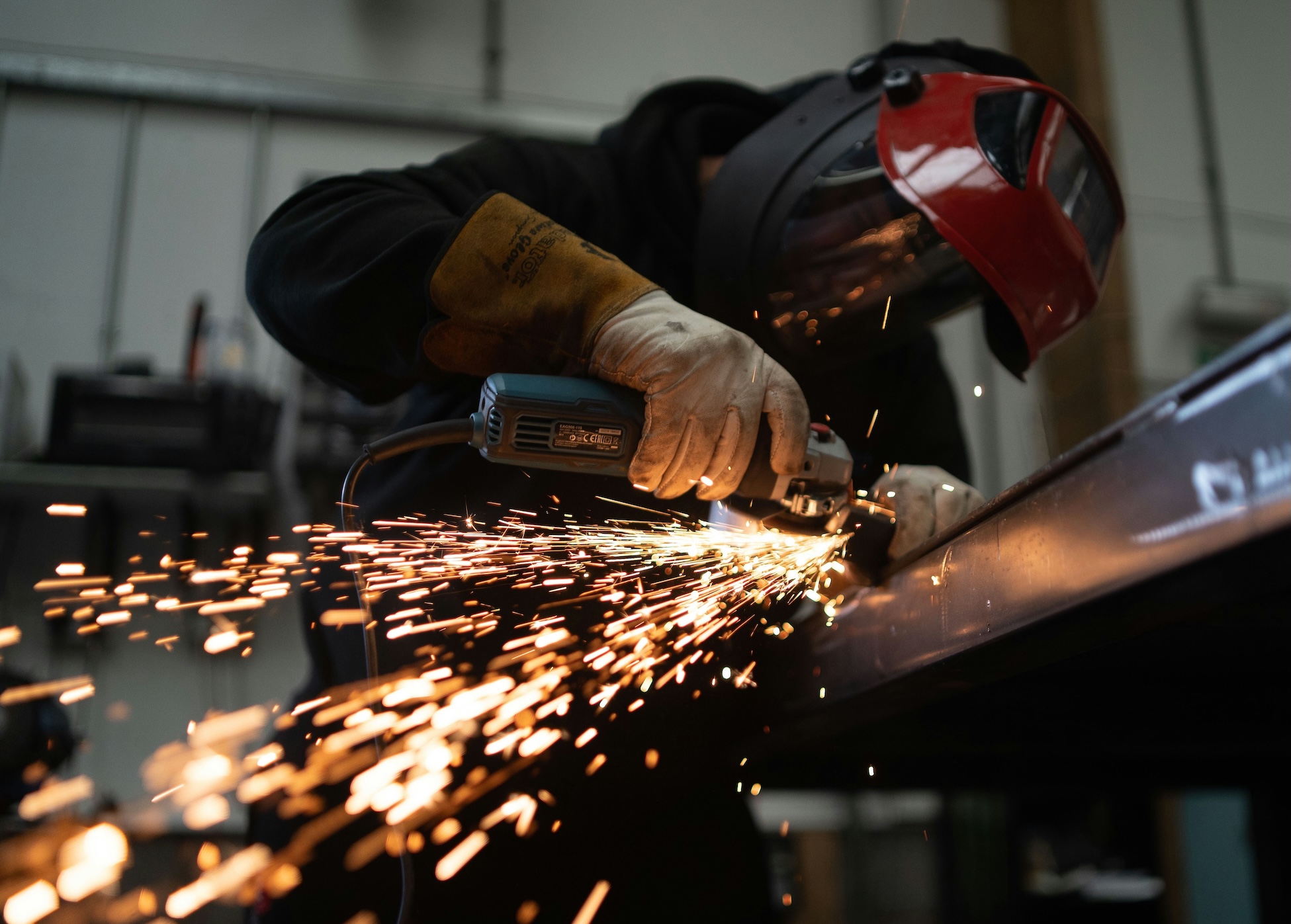
They say there’s a subreddit for everything, and manufacturing is no exception. In an effort to stay connected to one of our favorite client industries, we recently paid a visit to r/manufacturing, and spent some time reading insights from manufacturing pros around the world.
Their conversations inspired us to compile the following list of “hot takes,” as the kids say, straight from the keyboards of industry veterans. Below are a few things people outside the manufacturing world might be surprised to learn.
Label printers can sense fear
One commenter put it best: label printers can sense fear. As industrial label printer experts, we’re inclined to agree. It is best to always approach your label printer with a calm and confident demeanor. Do not make any sudden motions around the label printer, and do not, under any circumstances, let the label printer overhear how important a project is. Come to think of it, this applies to all manufacturing machinery. As one user wrote, “If you have test equipment, it hears you, and it hates you.”
With that said, other users noted that certain people seem to have earned their label printers’ respect. These so-called “label printer whisperers” are sometimes able to repair their machines without exerting any effort at all. One commenter noted, “Label printers like me. Someone comes to me and goes, ‘Hey, this thing isn’t working.’ I walk over to it, and perform no actions. It starts working again.”
Again, this phenomenon is not limited to label printers. One user wrote, “Continuous ESD monitors always behave when I’m around. The moment I walk away, they seem to have ground faults galore.” We can only hope that more of our clients are blessed with such wizardry.
Good operators are worth their weight in gold
Several users highlighted the value of an experienced operator on a plant floor. One user wrote, “As a process technician, a good operator has saved me a lot of downtime. They’re at the machine all day, every day, and know when something is off—a new rattle, a new squeak. This allows me to find and fix things when they are [still] a minor issue.”
Another user agreed that the best way to succeed in manufacturing is to rely on operator expertise. “Identify the guys on the floor with the tribal knowledge who are running the equipment and keeping it alive, and become best friends with them,” the user wrote. “They will tell you the truth when something goes wrong, and they are the ones who go the extra mile to fix things.”
On the flip side, some users pointed out that running a plant on institutional knowledge isn’t always a good thing. When an experienced operator or technician leaves, the knowledge they possessed often leaves with them, causing challenges for the team that remains. As one commenter joked, “That old-timer that knows every nut and bolt by memory and keeps the operation running is planning to retire soon and hasn’t told anybody.”
Maintenance is insurance
If all employees aren’t busy, at all times, it’s easy to assume that money is metaphorically flying out the window. However, one user pointed out that this isn’t always the case. “Maintenance staff is insurance. If your maintenance and process folks aren’t busy, it means you’re making money,” they wrote.
There is some wisdom in this. Maintenance technicians help prevent costly breakdowns, and process technicians are often called in when equipment needs adjustment, troubleshooting, or optimization. If they have nothing urgent to address, it often means that the machines are running smoothly and production is flowing as planned.
However, we should point out that this isn’t the case for every facility. Many plants keep process and maintenance technicians busy with continuous improvement projects, preventative maintenance, and efficiency initiatives, even when production is running flawlessly. Still, an idle maintenance or process technician isn’t necessarily a sign of trouble. Sometimes, it’s a sign that everything is working exactly as intended.
The best tool is the one people use
There are now thousands of software solutions designed to improve manufacturing efficiency. However, Redditors noted that one remains a fixture in many manufacturing facilities: the humble Microsoft Excel. According to several users, that’s because nearly everyone—from machine operators to the CEO—has used Excel at some point. While newer platforms offer more specialized capabilities, many plants don’t have the time to implement them.
Sometimes, users noted, a facility’s preferred solution isn’t digital at all. One user wrote, “We have proprietary scheduling software, a job dashboard, two Warehouse Management Systems, and multiple calendars…but our master job list is still a whiteboard.” Another described juggling so many overlapping systems that they eventually resorted to keeping a handwritten notebook to track information.
Yet another user pointed out that efforts to consolidate multiple manufacturing solutions are often in vain. “That’s the general meme of manufacturing—we have 14 softwares, so we decided to make one to unify all of them. Now we have 15 softwares,” they joked. The bottom line? The best tool for the job is often whatever reliably gets it done, whether that’s enterprise software, a spreadsheet, or a notebook.
The show will go wrong
One common type of visitor to r/manufacturing is a young person who is starting their first manufacturing job, requesting tips for success. The most common advice they receive can be summarized in one phrase: “The show will go wrong.”
It will go wrong on the day that leadership visits. And it will go wrong on a Friday at 4:30 p.m. It will go wrong before a holiday. As one user wrote, “Bonus points if it happens to be your wedding, kid’s graduation, Mom’s birthday, or other major event that weekend.”
To accommodate this fact, users said, one should always have a contingency plan, and always keep critical parts and materials on hand. As one user put it, “Use the old adage of MRO procurement: ‘Two is one, and one is none.’ Another wrote, “The one tool that you don’t have a backup for will be the machine that dies. Plan accordingly.”
It’s all about the people skills
The most critical thing a manufacturing worker might need, according to Reddit? People skills. “It doesn’t matter what your job is, or how technical it is,” one user wrote. “Eventually your performance will come down to people, and how well you can talk to them.”
Another agreed, adding that interpersonal skills are a key factor in career advancement, too. “I have seen many good engineers get frustrated because they see engineers with less technical skills move up the ladder. But if you can’t communicate your ideas and bring out the best from others, then you will find yourself stuck,” they wrote. “Engineers need to work in teams, interact with non-engineers, and often answer to non-engineers. It’s [challenging] for a lot of engineers, but it’s necessary.”
Other users pointed out that good people skills help build long-term relationships with suppliers, customers, and partners. “If I had to pick the biggest mistake people make, it’s underestimating how relationship-based all of this is,” one user wrote. “A factory gives you its best quality and timing when it sees you as someone worth keeping around for years.” Another user added, “Very true, and well observed. I’m in Vietnam, and it’s always relationship first, business later for the best results.”
Prioritize, prioritize, prioritize
Manufacturing pros had one common thread of advice for those struggling with burnout: learn to prioritize.
“I’ve learned to prioritize the urgency. I don’t need to treat everyone’s problems as my emergency,” one user wrote. “[My team is] secondary support, so I wait for maintenance to take their shot at getting things running before getting involved.”
Another user echoed the sentiment, recalling, “My first plant job, I burned three months treating every line down as my fire to put out, and went home wrecked every night. The day my mentor walked me through how to actually wait at the back of the room while maintenance triages was the day the role became sustainable.”
Another user pointed out that, when prioritization becomes difficult, management can be a valuable resource. “If you get in over your head with work, let management prioritize for you. Go to your manager and say, ‘Hey, I can do A, but B will get pushed out.’ Or, ‘A and B are both hot jobs, which do I finish first?’” they wrote.
Others reassured new hires that, although it can be difficult to adapt to the fast pace of a factory, eventually, it all becomes manageable. As one user put it, “You do get used to the chaos. I actually kind of prefer it that way.”
Mark, code, pack, and track your image with SSI
Whether it’s learning to prioritize, keeping a backup plan, or accepting that Excel isn’t going anywhere anytime soon, one thing became clear from our time browsing r/manufacturing: the business is as much about people as it is about machines. Though the technology might change and evolve, the insights shared by industry professionals will always be just as valuable.
At SSI Packaging, we’re proud to support the manufacturing industry with industrial printing, labeling, marking, and coding solutions. Based in Richmond, Virginia, we work with manufacturers and companies across a wide range of industries to provide reliable packaging and identification equipment.
If you’re looking for a partner who understands the challenges of modern manufacturing, we’d love to help. Please visit our website to learn more!