


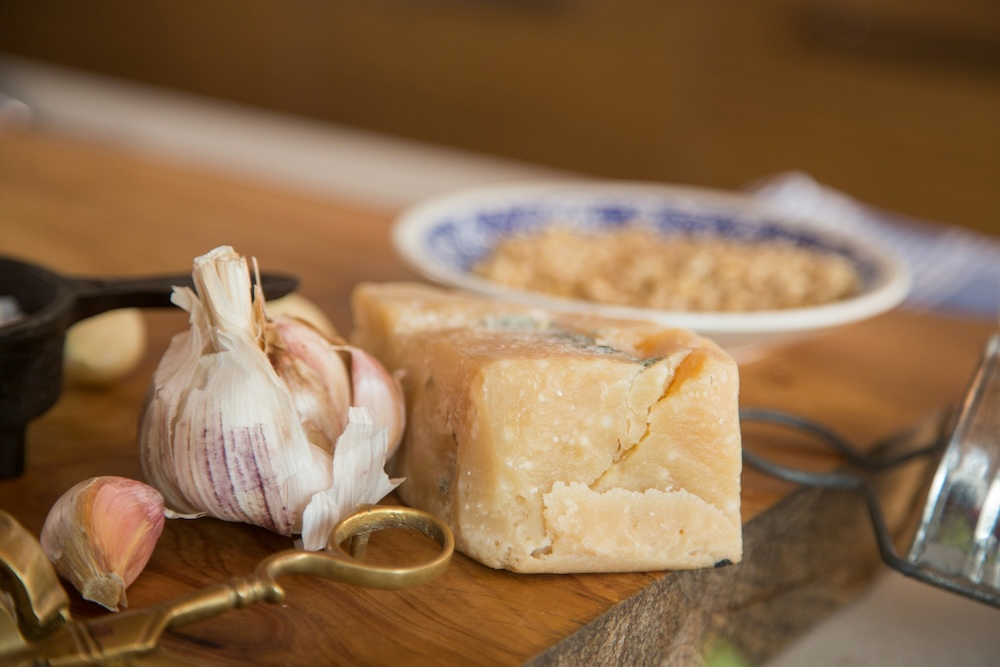
In November 2025, the U.S. Food and Drug Administration (FDA) sent out a recall alert for Boar’s Head® Pecorino Romano cheese. Then, in January 2026, the FDA updated that recall to a Class 1, indicating its highest level of risk. In today’s post, we’ll share everything you need to know about the January 2026 cheese recall, and discuss how inventory tracking helps people safe during food safety emergencies like this one.
Which foods were affected?
First things first: which cheeses do you need to toss from your refrigerator? The cheeses affected by the recall all originate from The Ambriola Co., an American importer and distributor of Italian cheese brands. Between November 3 and November 20, 2025, it distributed the following potentially contaminated products:
- Locatelli® Grated Pecorino Romano, sold in cups and bags
- Boar’s Head® Grated Pecorino Romano, sold in cups and bags
- Member’s Mark® (Sam’s Club) Grated Pecorino Romano, sold in plastic bags
- Ambriola® Piccante Grated Pecorino Romano, sold in plastic bags
- Pinna® Grated Pecorino Romano, sold in plastic bags
The affected products have expiration dates between February 2026 and May 2026.
While the recall is nationwide, the cheeses were primarily distributed to retailers in 20 states: Arizona, California, Colorado, Connecticut, Delaware, Florida, Georgia, Illinois, Indiana, Massachusetts, Maine, New Jersey, New York, Ohio, Oregon, Pennsylvania, Texas, Virginia, Washington, and Wisconsin.
Another cheese product, Der Mutterschaf Cheese, has also been issued a Class 1 recall in January 2026. It was produced by Goot Essa LLC, an Amish-owned company based in Pennsylvania.
Why are these products potentially dangerous?
A Class I recall is the most serious of the FDA’s three recall levels, indicating a “reasonable probability” that consumption will cause serious adverse health consequences or death. In this case, the suspected contaminant is Listeria monocytogenes. This is a hardy, disease-causing bacterium commonly found in soil, water, and animal waste. It was found in the cheese production facility during routine scheduled testing.
Listeria is uniquely dangerous because, unlike other foodborne pathogens, it thrives in cold, damp environments. This means that refrigeration temperatures are not enough to keep products safe.
Even worse, Listeria has an invisible presence: the food it contaminates does not look, smell, or taste spoiled. This makes it essentially impossible to detect without lab equipment.
Listeria also has a relatively long incubation time, and can remain undetected in the body for up to 10 weeks. This makes it difficult for people who have ingested it to determine which product was the culprit. And, unfortunately, there is currently no medical test that can accurately determine if Listeria is the your body before symptoms occur.
What does Listeria cause?
The infection caused by listeria is called listeriosis. In healthy people, its effects can be mild and self-limiting. But in high-risk groups—like infants, elderly people, pregnant women, and immunocompromised induviduals—it can be life-threatening. It takes one of two forms:
- Non-invasive listeria: Remains in the digestive tract and causes “flu-like” symptoms such as fever, muscle aches, nausea, and diarrhea that usually last 1–3 days.
- Invasive listeria: Occurs when the bacteria spreads beyond the gut into the blood (causing sepsis) or into the nervous system (causing meningitis). Either of these outcomes can be life-threatening.
What should I do if I suspect I was affected?
Do you suspect that you have eaten one of the products targeted by the recall? If you still have the cheese packaging on hand, first examine the product’s lot codes and expiration dates. Then, visit the FDA website to learn about the specific products which were affected.
Next, monitor yourself closely for signs of fever or severe headache for the next two months. Remember that listeria can remain in the body for up to 70 days, and cannot be accurately tested for. If you are pregnant, over 65, or have a weakened immune system, contact a doctor immediately if you develop even mild flu-like symptoms.
Listeria survives in cold, damp environments and can spread to other foods. Therefore, take care to thoroughly sanitize your kitchen, especially all refrigerator shelves, drawers, and countertops that may have touched the product.
Finally: don’t panic! Keep reading to learn why contamination is not a guarantee of illness.
Keeping calm: key points to remember
All food recalls tend to be frightening for the public, especially in the years following the Covid-19 pandemic. However, health experts emphasize that the public should remain vigilant, rather than panicked. When anxiety spikes, keep the following points in mind:
- At the time of this writing (January 20, 2026), there have been no confirmed reports of illnesses or deaths linked to the recalled products.
- The FDA and affected company acted based on scheduled environmental testing in the production facility. Modern food safety systems are designed to prevent outbreaks before they occur. The recall is the result of a robust safety system working as it should.
- The majority of healthy individuals will not develop a severe, invasive infection if exposed to listeria. Typically, affected individuals will experience either no symptoms at all, or a mild, self-limiting case of “food poisoning” (fever and diarrhea) that resolves without medical intervention.
- To stay on the safe side, most companies and governments issue recalls for vast batches of products. However, the actual contamination might only have affected a small production run or “lot.”
So, while the recall does indicate a serious risk, don’t panic. Recalls are a relatively frequent occurrence in first-world countries. This is not because our food quality is poor, but because our means of detection are sophisticated—and improving every year.
How inventory management keeps us safe!
During situations like the January 2026 cheese recall, we can thank inventory management, supported by precise marking and coding, for keeping us all safe. Marking products with unique codes makes it easy for companies and distributors to track their products as they journey from the production line to your refrigerator.
Without a robust coding system, a company like The Ambriola Co. might be forced to recall every product it ever made in order to protect consumers. But thanks to lot numbers and batch codes, it can isolate only the specific products that were manufactured during a contamination event. Inventory management systems also help improve operational efficiency, and prevent billions of dollars in food waste.
Conclusion
SSI Packaging is proud to play a small, but pivotal role in the system that keeps our food and our families safe. Our Richmond marking and coding company provides the equipment and expertise that make product traceability easy and affordable. If you have questions about optimizing your food safety strategies; improving your manufacturing efficiency; or anything else, please give us a call. Our marking and coding experts are happy to help organizations big and small succeed in today’s dynamic global market.